
Description
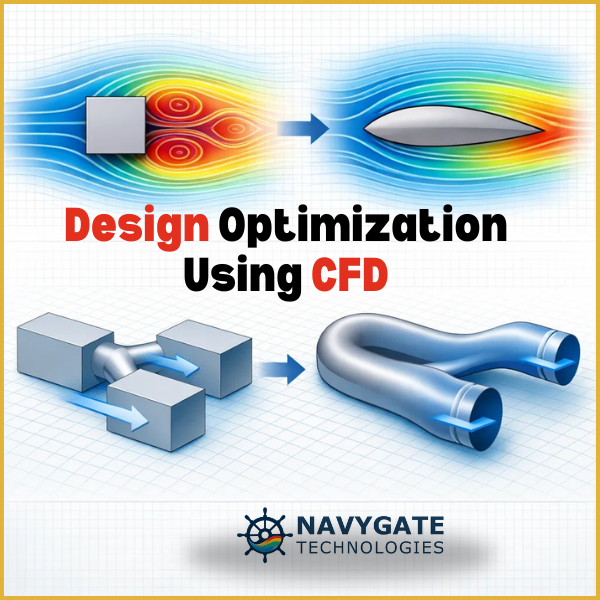
This course is a hands-on introduction to CFD-based design optimization using OpenFOAM, aimed at helping learners move beyond flow visualization and into systematic, simulation-driven design improvement. The emphasis is on understanding how optimization problems are formulated in CFD, why specific modeling choices matter, and how optimization workflows are implemented in practice—without unnecessary mathematical complexity.
Using carefully designed low-dimensional example cases, the course walks through sensitivity analysis, shape optimization, and topology optimization, focusing on clarity, physical interpretation, and reproducibility rather than large-scale industrial complexity.
What You Will Learn
- How CFD-based optimization problems are formulated from an engineering and design perspective
- The complete adjoint-based optimization workflow in OpenFOAM
- How to perform sensitivity analysis and interpret sensitivity fields
- How to set up and run shape optimization using a 2D flow past a square cylinder
- How to perform topology optimization for internal flows using a porosity-based formulation
- How to configure and use OpenFOAM optimization dictionaries and solvers
- How to interpret optimization results physically and numerically
- Common implementation pitfalls (e.g. porosity source-term coupling, constraints, instability) and how to fix them
- How to modify and extend example cases for your own CFD problems
Intended Learners
This course is designed for:
- CFD users who want to move from analysis to design optimization
- Graduate students and researchers working in fluid mechanics or multiphase flows
- Engineers using OpenFOAM who want a practical introduction to adjoint methods
- Learners interested in shape and topology optimization without heavy mathematical prerequisites
- Anyone who wants to understand how and why CFD optimization works, not just how to run scripts
No prior knowledge of adjoint methods is required.
Must-Haves
- Basic familiarity with CFD concepts (governing equations, boundary conditions, meshes)
- Prior experience running OpenFOAM simulations
- OpenFOAM v2412 installed (all cases and dictionaries are compatible)
- Willingness to run, modify, and experiment with working case files
- A focus on learning methodology and interpretation rather than high-fidelity industrial cases

Reviews
There are no reviews yet.